What Can a Coconut Teach Us About Resilience?
 Pavla Borg
What can coconuts, Tibetan monks, biohacking and ice baths teach us about resilience?
In June, I spent two inspiring days at the Biohacking Summit in Prague surrounded by the latest innovations in health, longevity and human performance. I came home with pages of notes about mitochondria, longevity, biomarkers, metabolism, light therapy and some truly fascinating emerging science.
I love learning about these things. I really do. I believe we're living in one of the most exciting times in the history of health.
But every conference leaves me with exactly the same thought.
The newest discoveries don't replace the fundamentals.
They help us understand why the fundamentals work.
The more science I learn, the more respect I have for ordinary things like breathing, sleep, natural movement, whole foods, time in nature and meaningful human connection.
That thought stayed with me as I prepared the June edition of Ice Bath Tribe meetup.
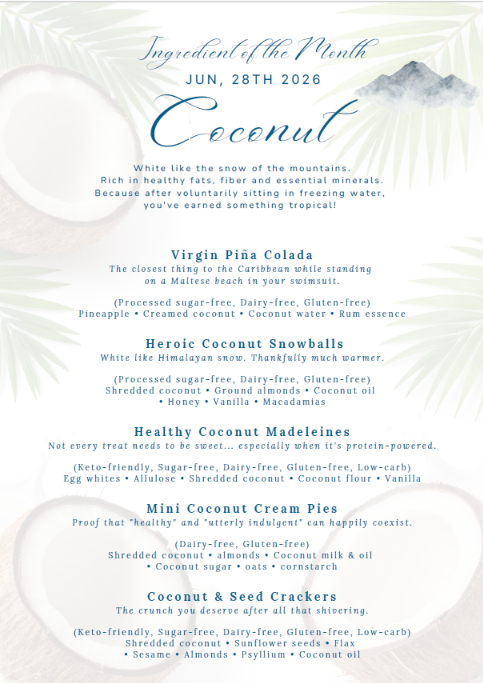
Every month I like to choose one "Heroic Ingredient" to celebrate... not because I believe in superfoods but because I love reminding people that ordinary foods often have extraordinary stories.
In June, the star of the show was coconut.
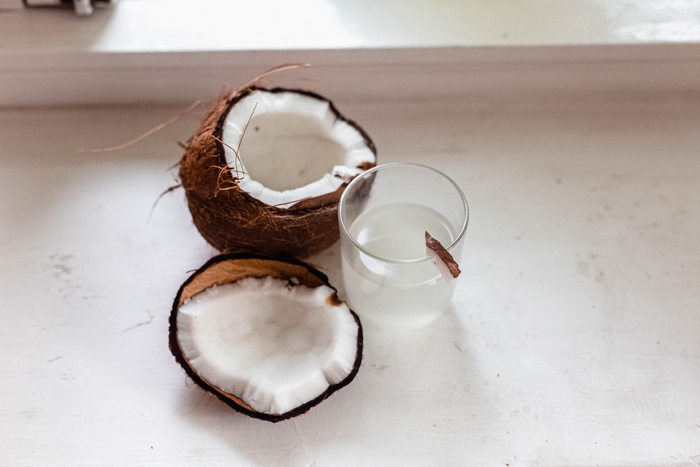
Most people think of coconut as something tropical: piña coladas, beaches and holidays. Yet it's so much more fascinating than that. Despite its name, a coconut isn't actually a nut. Botanically it's a fruit, a drupe, just like a peach or an olive.
Some cultures call the coconut palm The Tree of Life... and it's easy to understand why. Almost every part of it can be used: its flesh and water provide food and drink, while its milk, cream and oil have countless culinary uses. Its husk becomes rope, mats and brushes, its shell becomes bowls, charcoal and even musical instruments, and in some parts of the world its leaves are woven into roofs and baskets.
Very little goes to waste and that alone is such a beautiful lesson in resourcefulness. Did your jaw drop? Mine certainly did...
But there is more! And some stories sound almost too extraordinary to be true.
Fresh coconut water is naturally sterile while sealed inside the fruit. During World War II, when medical supplies were scarce in parts of the Pacific, it was occasionally used as a temporary intravenous fluid because of its water, glucose and electrolyte content. It was an emergency solution when conventional IV fluids weren't available.
Its seed is one of the largest in the plant kingdom and its thick shell allows it to float across oceans for months before washing ashore and taking root on distant islands. But it also tests our patience: twice! Firstly, it can spend almost an entire year maturing before it is ready to harvest. Secondly, as I discovered while preparing for the meetup, cracking a coconut is not an easy task without the right tools.
Coconut has plenty to offer nutritionally too. Unlike most fruits, much of its flesh is fat rather than carbohydrate. It provides fiber, manganese, copper, iron and selenium, while coconut water provides potassium and smaller amounts of other electrolytes, particularly welcome during scorching summer months.
Yet the biggest lesson wasn't nutritional. It was symbolic.
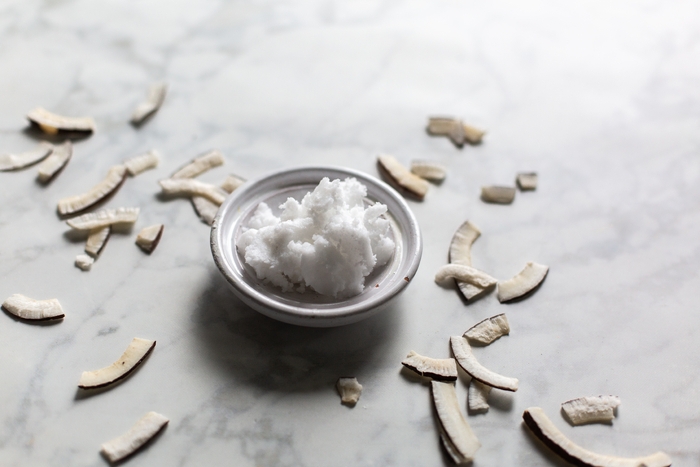
The coconut reminded me that sometimes the greatest treasures are hidden beneath an ordinary shell. And people are much the same.
Tummo meditation
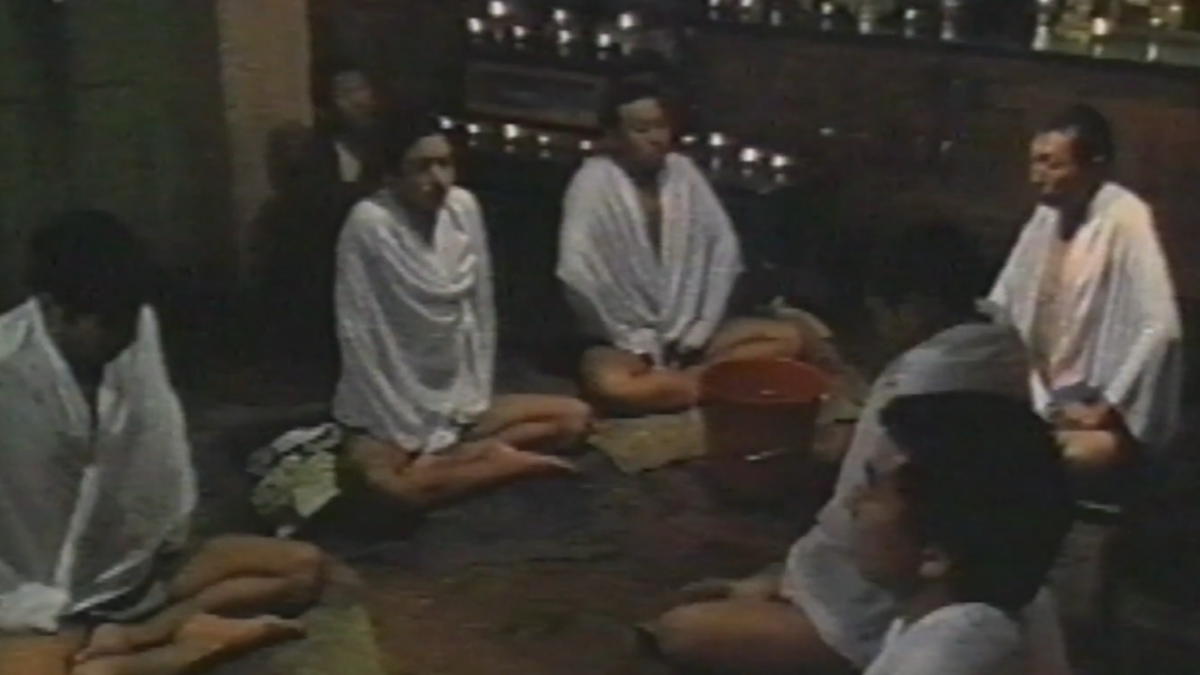
For centuries, stories circulated about Tibetan monks high in the white peaks of the Himalayas who could generate extraordinary amounts of heat through a meditation known as Tummo, often translated as Inner Fire. These stories told of monks sitting in freezing temperatures wearing almost nothing, wrapped in icy wet sheets that gradually steamed dry around them.
Many dismissed those stories as myths until science became curious.
Dr Herbert Benson from Harvard Medical School travelled to northern India to study these practitioners after the Dalai Lama agreed to help him. During expeditions in the 1980s, Benson and his team documented monks using g-Tummo meditation who could raise the temperature of their fingers and toes by as much as 17°F. They also documented practitioners drying cold, wet sheets with the heat produced by their bodies during meditation.
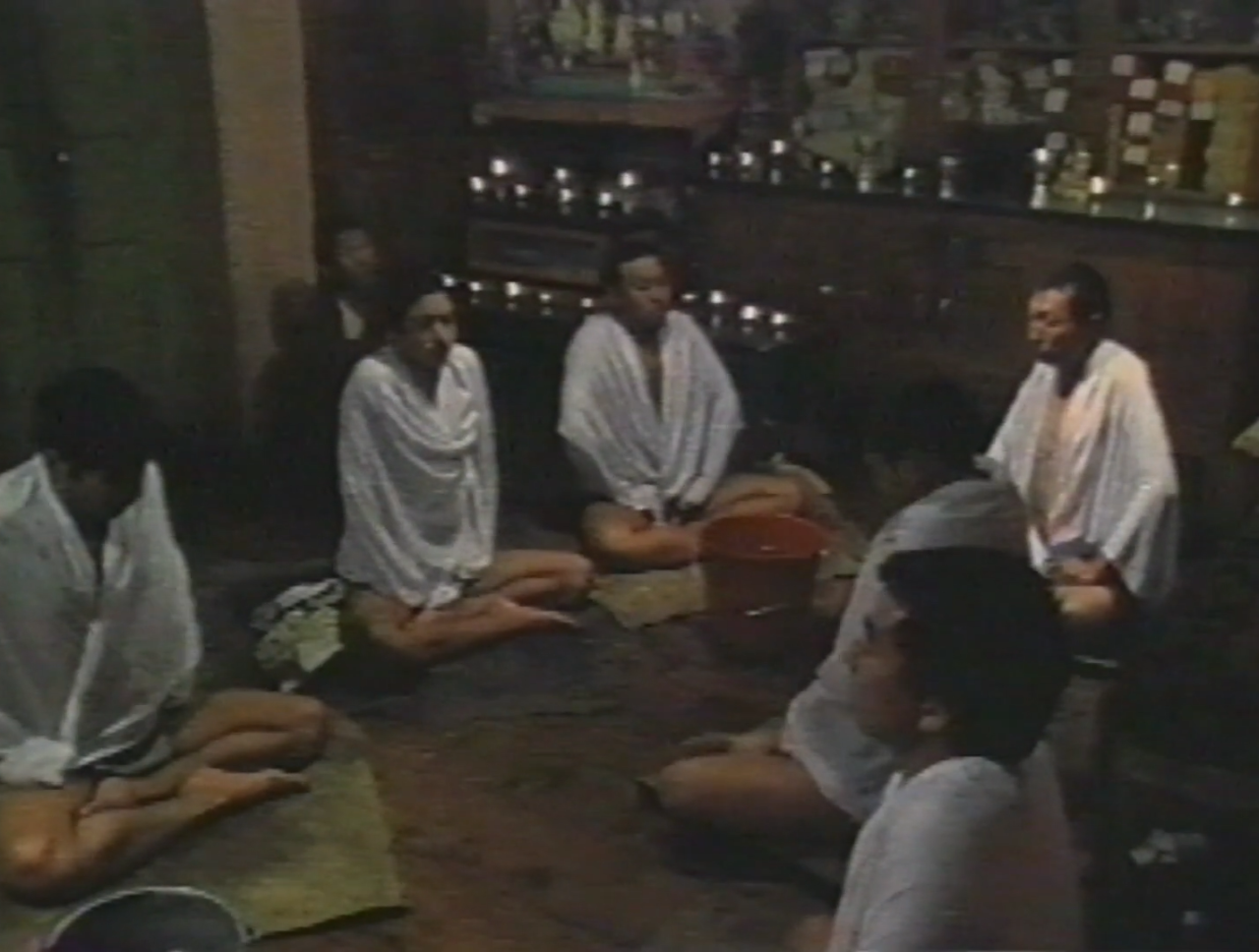
But even then, these abilities still felt distant, almost mythical. Something reserved for highly trained monks living in remote monasteries.
Then along came a Dutchman called Wim Hof.
Wim has often acknowledged the inspiration he found in ancient traditions including Tummo. Before one of his early records submerged in ice, Tibetan monks presented him with a traditional white khata scarf, a gesture of blessing, respect and encouragement.
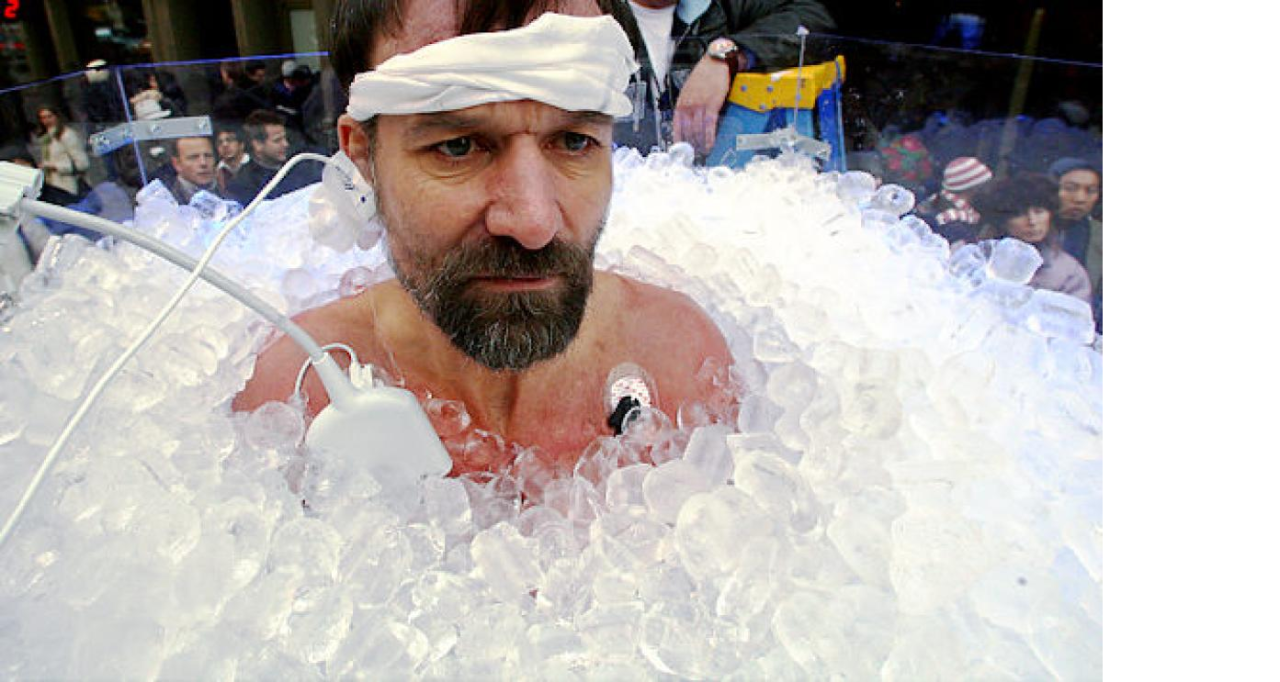
I have always loved that image. To me it symbolises continuity: East meeting West, ancient wisdom meeting modern science.
I sometimes hear people dismiss Wim by saying, "He didn't invent this." That's true and I never heard him claim that he did. And the Wim Hof Method isn't Tummo. Tummo is a complex Tibetan Buddhist meditation practice with its own spiritual tradition while the Wim Hof Method is a modern method built around three pillars: breathing, cold exposure and mindset.
There are obvious points of connection: the breath, the cold and the power of focused attention but what Wim did was something different. Through his own experiments, extraordinary feats and eventually scientific research, he showed millions of ordinary people that perhaps we have more influence over our physiology than we once believed.
His message has never really been, "Look what I can do."
It's always been, "Look what you can do."
That is exactly what we explored during our little "wet sheet experiment." After all, perhaps the secret to staying young isn't trying not to grow old but remembering how to play.
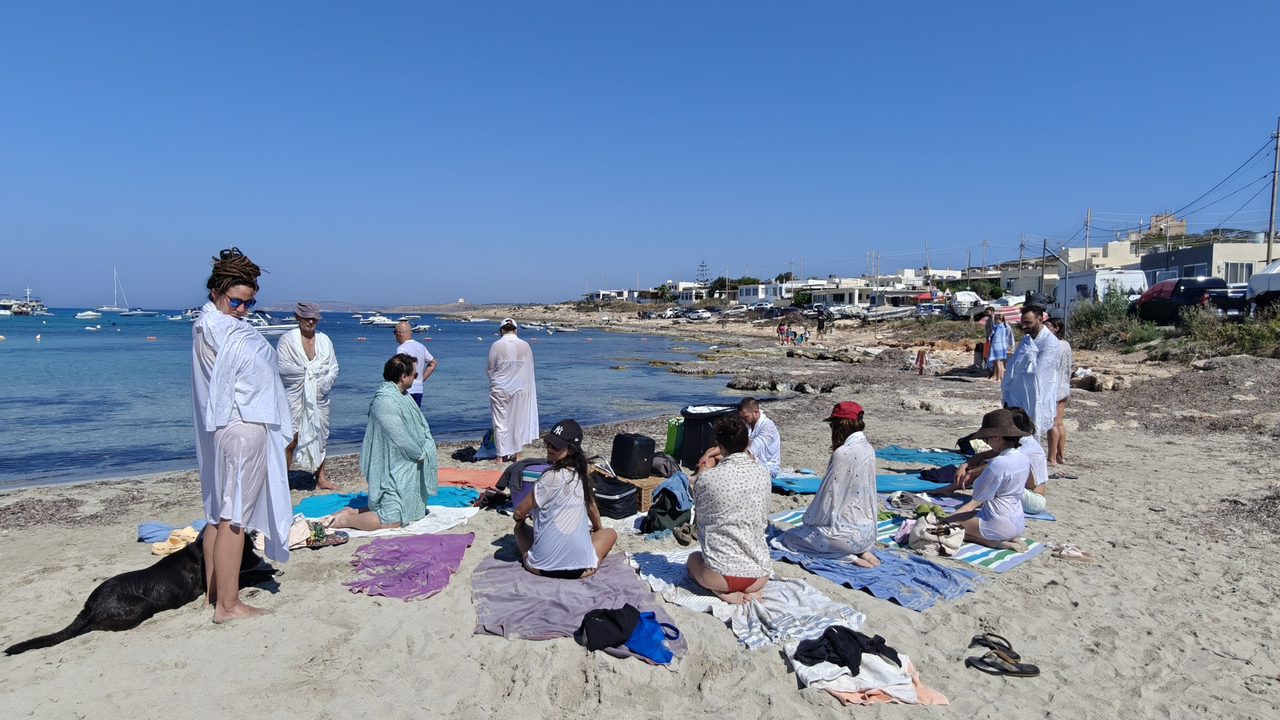
We didn't expect to dry our sheets or become Tummo monks. Instead, for five quiet minutes, we simply had an opportunity to become curious:
What happens when we stop fighting discomfort?
What happens when we soften instead of brace?
What happens when we remember that perhaps our greatest capacities have been there all along... beneath the surface?
That, to me, is resilience. Not conquering discomfort but changing our relationship with it.
And perhaps that's true far beyond an ice bath.
We don't build resilience when life falls apart. We build it long before we need it, through every walk, every nourishing meal, every good night's sleep, every difficult conversation we choose to have and every moment we pause to breathe instead of react. These things may seem small and ordinary at the time but together they build our capacity for when we really need it.
That idea stayed with me because another presentation at the Biohacking summit had been asking exactly the same question from a different angle:
What does Top 1% Health actually look like?
It came from Siim Land, winner of the Longevity World Cup, whose biological age testing showed him around 21 years younger than his chronological age.
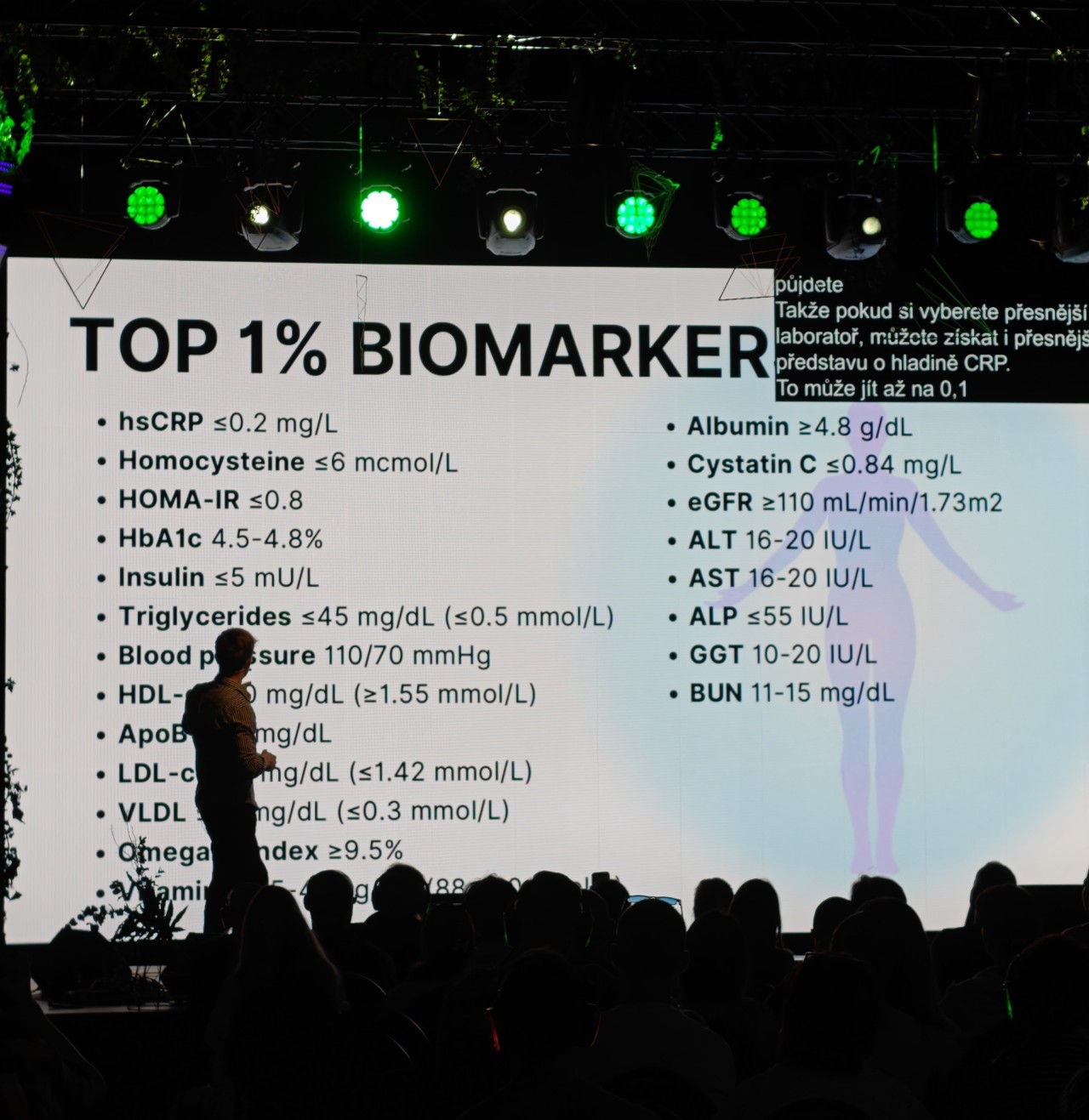
His answer wasn't simply absence of disease. Instead, he described health as a balance of physical fitness, biomarkers, mental health, social health, resilience, cognition and even epigenetics: a much broader definition of health than simply not being ill.
He then shared something even more important. The biggest predictor of happiness isn't your VO₂ max. It isn't your bank balance or your status. It's the quality of your relationships.
That slide made me smile.
Because as I looked around our little community afterwards, people sharing homemade coconut treats, laughing together, encouraging each other into the icebath and chatting long after it was over, I realised that perhaps we were practising Top 1% Health without even calling it that.
When another heatwave comes, you can have your own little Tummo-inspired experiment... without the Himalayas. A cool damp cotton sheet or towel can feel wonderful when the temperature climbs. Keep a chilled coconut water in the fridge too. Not because it's magical but because it's a refreshing drink that provides potassium and other electrolytes. And better yet, take one to an elderly neighbour, a parent or a friend who might be struggling with the heat. Sometimes the healthiest thing we can do isn't for ourselves at all.
And finally... because people often ask me, yes, I did bring something new, something blue, something from the summit... 😊
Methylene blue!
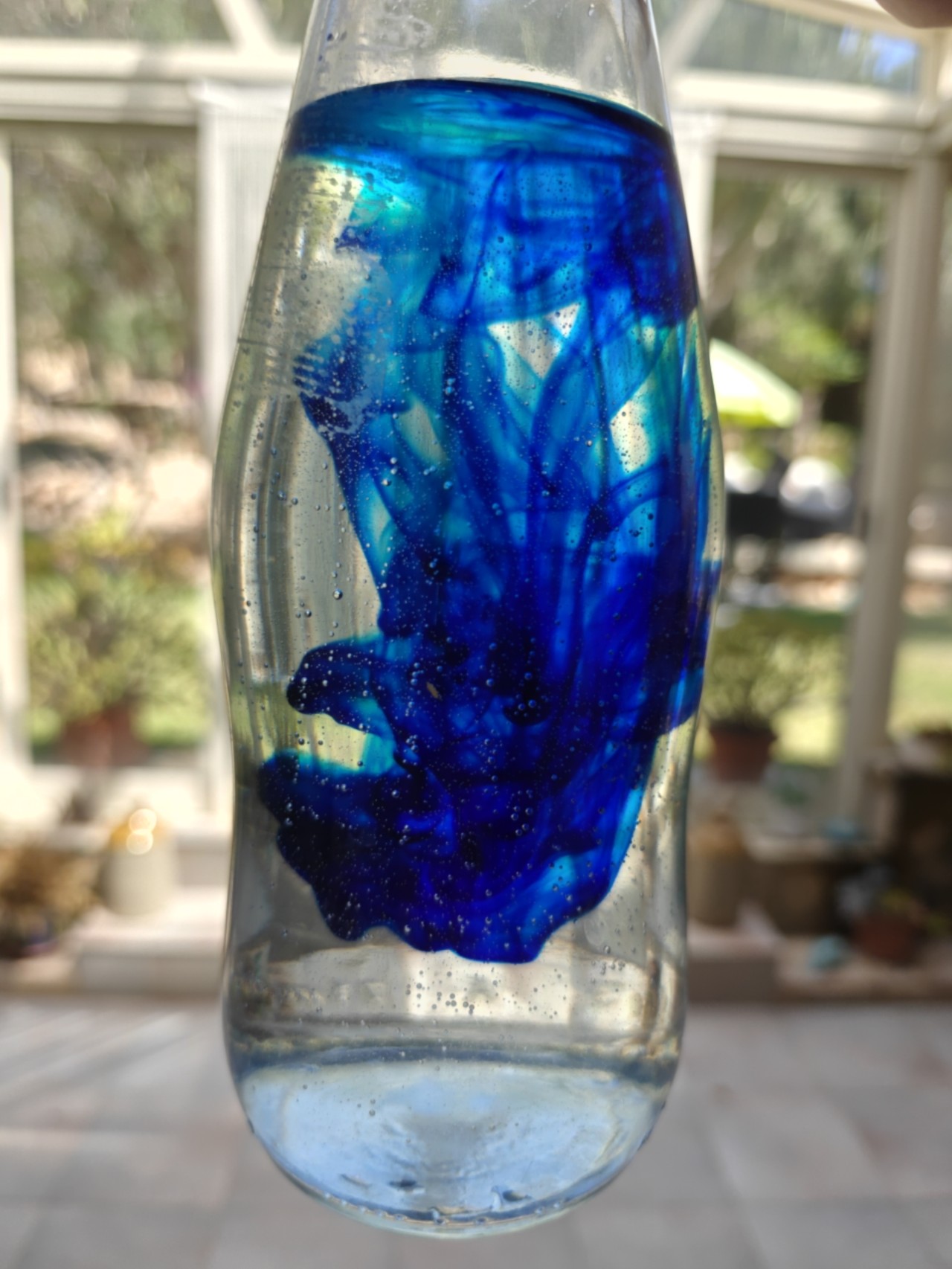
One of the oldest medicines still used in modern healthcare. More recently, it has attracted interest because, at very low doses, it appears to support mitochondrial function by helping cells produce energy more efficiently. Early research into cognition, healthy ageing and neuroprotection is interesting, although much remains to be studied and this is not an endorsement! It may also interact with your existing medicine.
Like many of the newer developments in longevity, I find it fascinating. But I also believe it belongs exactly where all biohacks belong: after the foundations of nourishing food, movement, good sleep and meaningful relationships.
Because extraordinary health is rarely built by extraordinary things. More often, it's built through the choices we make every day: how we eat, how we move, how we breathe, how well we sleep and the people we share our lives with. None of these things sounds particularly extraordinary but done consistently, they simply become a way of life.
After all, health isn't something we suddenly rescue. It's something we nurture long before it starts breaking down.
Perhaps that's why I enjoy choosing one ordinary ingredient every month. Not because coconut will transform your life but because it reminds me of something I've believed for a long time: there is something extraordinary to be found in the ordinary and often a little magic just outside our comfort zone.
Sometimes it might be hidden inside a coconut. Sometimes we discover it in a cold shower.
And sometimes we discover it in ourselves.
Join us...
See you in the next breath.
Categories: : Cold exposure, Recipes, Wim Hof Method
Enjoyed this? Stay curious with me.
Occasional thoughts on breathing, resilience, health, cold and the interesting things I discover along the way.
Plus first notice of workshops and community events.